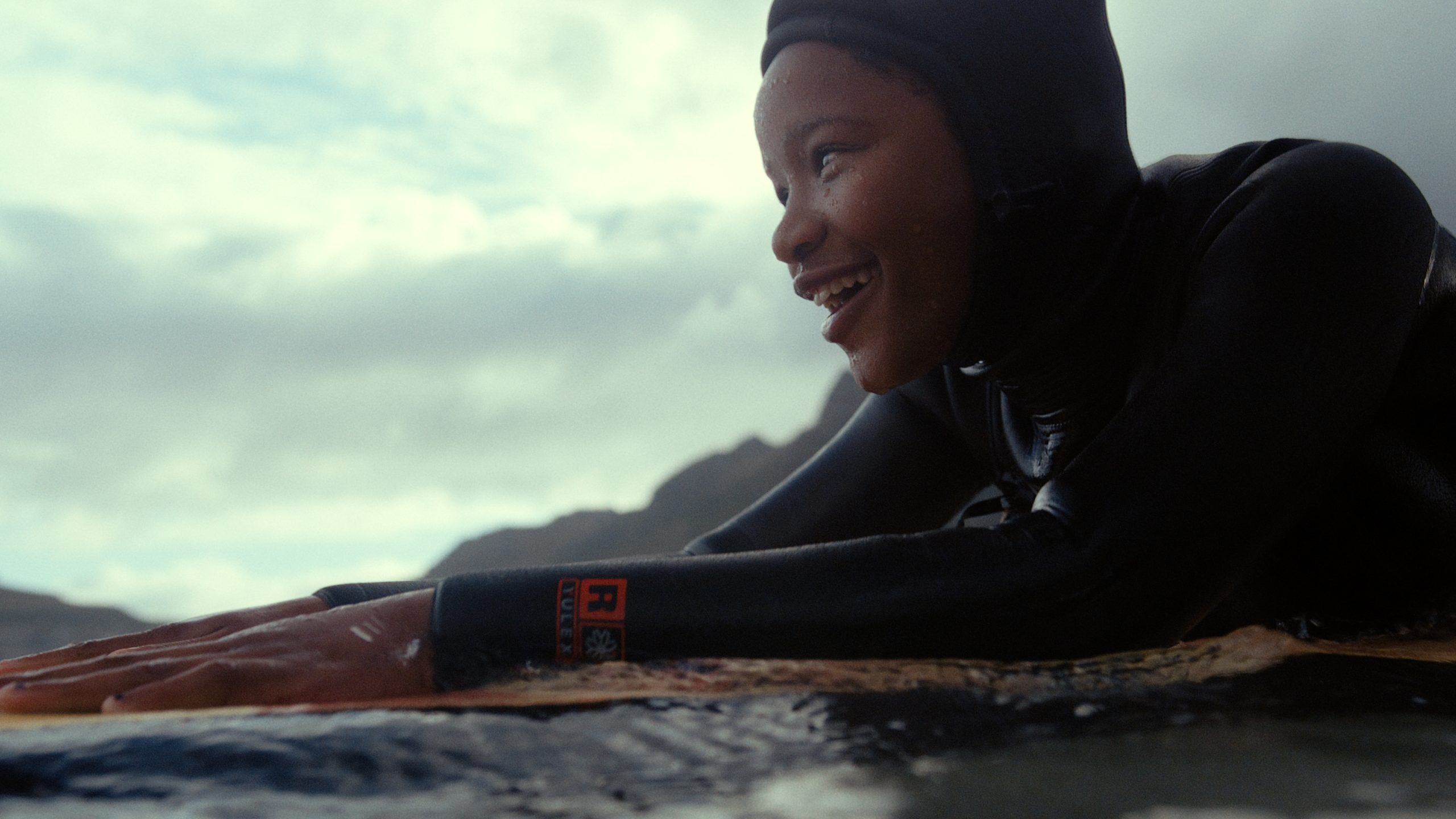
Words by Dom Moore of Surf Sanctuary Cover shot by Nathan Benham.
Surfing has the potential to improve human health in ways that go far beyond blue health. The closest comparison in modern medicine is the emerging field of psychedelic therapy. Here we explore why these two seemingly different experiences may rely on the same underlying processes.
Mental ill health now accounts for more disability in the United Kingdom than cancer and heart disease combined. The scale of suffering is immense, and it is becoming clear that the conventional treatments do not reach everyone who needs help. One of the most promising new frontiers is psychedelic assisted therapy, which seems to work not because it generates visions or euphoria, but because it opens a temporary window of neuroplasticity. In that state, the brain becomes unusually capable of change.
Clinically administered psychedelics have been proven to treat intractable depression, PTSD, addictions, and stammers. Strikingly, one guided treatment can lead to improvements that last for up to a year.
What if certain surfing experiences open a similar window? Not metaphorically, but biologically. This idea only makes sense once we understand how psychedelic therapy actually works.
Psychedelics and the brain’s capacity to change
Psilocybin activates 5-HT2A receptors in the brain’s cortex. These receptors are not mood switches; they sit in networks associated with selfhood, perception, prediction, and behavioural patterns. When strongly stimulated, they trigger a rapid increase in dendritic spine* formation, allowing neurons to connect in new ways. The brain becomes more capable of learning: patterns that were long established can be updated. In scientific literature, this is described as a pivotal mental state. A moment where the mind becomes unusually open to meaningful experience, and where new insights can be integrated into long term behaviour.
Interestingly, it’s also shown that these states can occur without psychedelics, under psychologically intense experiences. I would add that personal agency, safety, and situations with a strong alignment with the individual’s values, will increase the likelihood of a pivotal mental state occurring. Those conditions appear in certain surfing experiences.

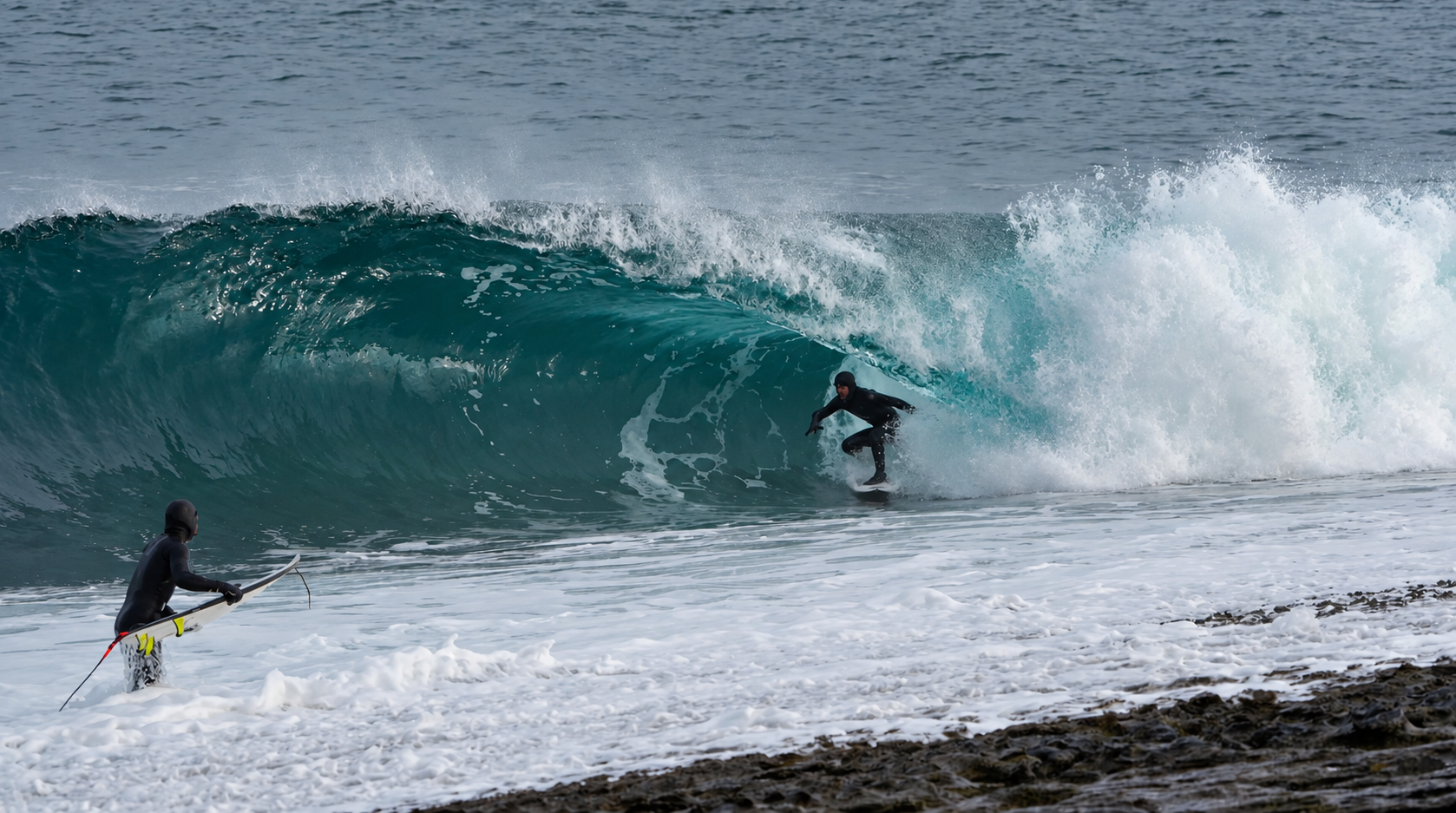
Surfing has that rare ability to change how we see the world. Photo: Benham.
Surfing towards pivotal mental states
Most surf sessions are pleasant. Some are exciting. A very small number are life defining. Surfers often describe these moments as if something has reorganised itself inside them. Time shifts and perception sharpens, and the words that surface afterwards are telling: unreal, mind bending, warping.
This does not happen because a wave is big. It happens because a wave is meaningful, frightening, beautiful and voluntary, and because the surfer meets it at the edge of their prepared ability. You cannot reach a pivotal mental state on a roller coaster, no matter how dramatic the sensations.
The ride demands nothing from you in terms of skill, judgement or value alignment. And in the same way, you cannot throw a non-surfer from a harbour wall into a storm sea, pull them out again, and expect something therapeutic to occur. That kind of forced exposure is more likely to damage a person than change them**.
View this post on Instagram
Surfing Cloudbreak, in Fiji, is no joke.
Here is some phenomenological data, if I may. Roughly a quarter of a century ago, I was lucky enough to surf Cloudbreak. My surfing back then was even more stiff and robotic, but after a month in Fiji I was ready for the challenge. It was four to eight feet, and as our boat approached I could see immaculate deep blue walls throwing thick lips and wide, elliptical tubes. The size and power were not in the other worldly realm, but I had never seen quality like it. I was drilled to the depths on my first two waves. As the third loomed into view, a chap from New Jersey shouted “OWN IT” with a kind of blunt encouragement that made sense in the moment.
I made the drop, the wall stretched up, and deep blue filled the entire left side of my visual field. The power transmitting through the board was beyond what I thought was possible. I was too scared to stall into the gaping tube behind my shoulder, so I simply held the rail and ran. I kicked out near the end of Shish-Kebabs, legs trembling and breath shallow, stunned by what had just happened. Seconds later I could recall almost none of it, but over the next couple of hours I sensed that something had changed, and that I would not step backwards from seeking that feeling again.
As with many intense experiences, not every moment sits on the growth side of the line. At Killer Point in Morocco, I remember being caught too far inside and driven into the bottom. This produced something different: a clean encounter with fear. I scraped over the first wave, was hit by the second, then held down and bounced by the third. The rest of the day was spent on shore, rattled and unwilling to re-enter the water.
Someone said, “You’ve got the fear,” and they were right. It was the other fork in the path. The literature is clear; pivotal mental states carry a bifurcation. The outcomes can be post traumatic growth or post traumatic stress. The difference lies in preparation, context, and whether you retain a sense of agency. That is why intensity must be scaled, not thrown at people.
And then there are waves that sit in a different category altogether. Steep, technical, unforgiving set-ups where the consequence is not hypothetical. Even brief moments surfing waves like these can produce something closer to revelation than thrill, and the feeling afterwards is not adrenaline but clarity. It brings an awareness that something in the mind has opened and will not close again.
There is a sense that nature contains gifts that puts striving for modern trappings into perspective. Your relationship with the ocean deepens, not because of the achievement, but because it has shown you a glimpse of what it can do to the mind. This sense of revelation is similar to what psychedelic research subjects describe. It’s often stated the experience among the most meaningful of subjects’ lives, comparable in gravity to the birth of a first child.
Phenomenology of the neuroplastic window
So what does this actually feel like? Surfers who have been through these moments describe a surprisingly consistent set of sensations, the sort that appear across different individuals, locations and waves, and which mirror features seen in psychedelic research:
Time dilation: events unfolding in fractions of seconds are perceived with unusual clarity
Visual expansion: colours or shapes seem to flare at the periphery
Cognitive quiet: internal chatter drops out
A lightening in the chest: the sense of pressure releasing
Brief auditory imagery: a bar or two of a song, intimate and fleeting, then gone
Post event calm: not elation, but meaningful stillness
Behavioural integration: life feels reordered in a way that persists
None of this is mystical. All of it matches with the signatures of a pivotal mental state. Psychological intensity, high stakes, deep meaning, voluntary engagement, and a successful passage through fear produce a window where the brain is unusually receptive to recalibration. Why would nature allow such powerful experiences to occur in the first place?
My theory is that their origins lie in the evolutionary pressures of the cognitive revolution, around one hundred thousand years ago, when our ancestors began to rely on planning, prediction and coordinated action. Survival often depended on mastering high stakes situations, whether bringing down dangerous prey or avoiding becoming prey yourself. A system that could rapidly and durably encode the skills and perceptions needed in those moments would have offered a clear evolutionary advantage. The mind-bending clarity that follows an intense experience may be the modern expression of that system: a mechanism designed to help us survive, now revealed through surfing rather than hunting.

Clarity comes from stress points, especially when removed from your comfort zone. Jaws, by Maggie Hallahan.
Why this is not blue mind
Blue mind is pleasant. Cold water dips are invigorating. These are transient mood modifiers, but they do not reorganise the person who experiences them. What we are dealing with here is reconfiguration: reductions in rumination, increased cognitive flexibility, resilience in unpredictable situations, creative problem solving, a durable sense of calm and a strengthened sense of agency. These are the kinds of outcomes associated with psychedelic therapy, and when they appear in surfing they are not temporary. They can last for years.
Intensity must be personal and progressive
The biggest mistake in thinking about this is assuming that big surf equals profound experience. It does not. Intensity is personal, and it fluctuates across your surfing life. Your capacity for intensity is more like a credit score than a line on a wave height chart. It can shoot up, crash, or stagnate. A wave that ‘bends your mind’ today won’t have the same qualities as one that bends it five years from now. As discussed earlier, throwing someone into conditions beyond their skill level produces panic or trauma, not transformation.
The ocean is not a theme park ride. It does not deliver growth on demand. What works is a steady progression along a long term pathway. There is not space here to set out surf training programmes in detail, but a useful way to think about progression is to consider the type of wave that could deliver a pivotal mental state for you. Every wave places demands across three broad domains: knowledge, technique and fitness. The next step is to take an honest look at your own position in each of these areas, not in abstract terms, but in relation to the specific demands of the wave you are aiming toward. The gaps between what the wave requires and where you currently are provide a clear framework for progression.
This process involves spending time with the ocean in different moods, learning how it behaves, and gradually tuning yourself to the conditions you will eventually want to meet. When the right moment does arrive, it will not feel like luck. It will feel like the natural outcome of the preparation you have done.
View this post on Instagram
Not just about big wave surfing, but Cliff breaks it all down here.
Long-term impacts for mental health
If surfing can reliably produce pivotal mental states, then it offers something extraordinary: a non pharmaceutical route to neuroplasticity. A natural counterpart to psychedelic therapy, without hallucinations, legal barriers or clinical settings.
This does not mean surfing replaces therapy. It may complement it, and in some cases it can act as its own form of guided psychological development. It is also worth saying that anyone who commits to a long-term attempt to reach a pivotal mental state through surfing, even if they never meet the perfect wave, will still see meaningful gains in their physical and mental health. No pharmaceutical company could make an equivalent claim. If a drug fails to work, the person does not benefit from the attempt. With surfing, the process itself carries value.
I have a simple question for you that can begin the investigation; For how long after the most intense wave of your life did you feel content? If the answer is measured in days, weeks or longer, then we are not dealing with recreation. We are dealing with reorganisation.
As surfers, we do not walk into the water seeking altered states. We go for reasons as simple as joy, challenge or familiarity. But on rare occasions, surfing produces something far deeper: the conditions for a pivotal mental state, a window where the mind can change. No psychedelics. No ceremony. Just agency, fear, meaning and the ocean. This is the frontier. Most of us will step into it without ever realising what we are doing.
Surf Science clinics in May and October 2026 explore the same principles of pivotal mental states, and planning your pathway to revelation. See here for details.
***
*Dendritic Spines: The brain can be thought of as a motile organ. It is composed of billions of neurons that connect together to form networks controlling every aspect of our perception, behaviour and emotional life; these networks are not fixed, but constantly shifting, strengthening and weakening in response to experience.
A physical process that allows this shifting is the formation of dendritic spines. These spines are tiny protrusions at the dendrite, the receiving end of a neuron, that appear within seconds of encountering a powerful or novel stimulus. They connect to the axon, the transmitting end of a neighbouring neuron, creating a synaptic tag. In the hours and days that follow, the memory of that experience is consolidated and the synaptic tag captures the proteins needed for structural modification. This builds a new connection, and with it the capacity for different thoughts, skills and behaviours.
**Agency in Surfing: Several broad factors influence whether a challenging session leads to an opportunity for growth or drifts toward post traumatic stress. Social context matters: are you alone, are you intimidated by the crowd, are you surfing at home or somewhere unfamiliar? Physiology plays a role as well. How surf fit are you, are you rested, are you hungover? Technical ability is an obvious demand; we do not rise to the occasion, we sink to the level of our training.
All of these feed into the most important factor: your sense of control over the situation. Do you understand what is happening in the water, and do you know the escape routes if something goes wrong? Sessions that offer waves capable of changing how you think will also deliver wipeouts that test your resolve. To reach the former, you need the capacity to return after the latter. That willingness is part of the agency the experience requires.