All imagery by director, Maddie Meddings.
Remember Caity Simmers’ now iconic line “Pipeline is for the f****** girls!” It resonated and made a mark on anyone that heard it – a slam dunk of a statement after a commanding performance at the world’s most famous wave.
It’s rare such candour is captured, let alone live. But there’s a moment in Maddie Meddings’ new film, Undercurrents, that could easily rival that, and it’s from 16-year-old Imari Hearn. We’re not going to spoil it, we just suggest you go watch, but it made us smile in a way only those moments can.
And that’s the energy of this triumphant flick; Undercurrents follows Laura Crane and Imari Hearn, two surfers from different generations, shaped by different worlds – from warm Indo barrels to the cold, heaving chaos of Nazaré.
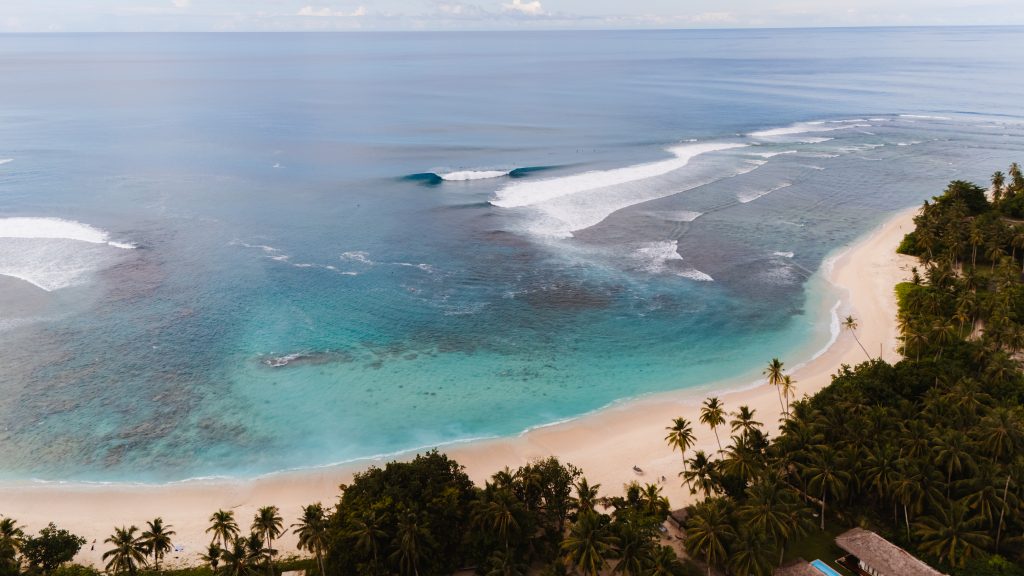
Yes, yes, we could wax lyrical about the destinations in this movie, from Indo to Nazare — but that would do the storytelling a disservice.
This is a film shaped with a sensitivity that mirrors its subject matter – a story of progression told through movement, distance and trust.
Maddie’s storytelling carries a quiet restraint, letting moments breathe rather than forcing meaning, while its cinematography moves between softness and scale.
It’s also filmed and shaped through a female lens. That perspective doesn’t sit as a statement within the film, but it’s felt throughout – in the way the women are framed, in the patience of the storytelling, and in the emotional detail held in each scene. It reinforces what Undercurrents is already saying without needing to say it out loud.
On paper, it’s a progression story; Imari showing Laura around Indo and some barrel-riding techniques and Laura returning the favour towing Imari into giant Nazaré In reality, it’s something looser, more human. Less about conquering a place, more about what it takes to get there – together. The real story sits in the in-between — mentorship, friendship, trust and the patience it takes to earn your place in waves like these.
“I think this movie for me really, is that I just wanted to inspire people, that whatever it is that sets your soul on fire, whatever that big crazy dream you may have, that it’s attainable, within your reach. It is possible alone, but it’s way better together,” said Laura.
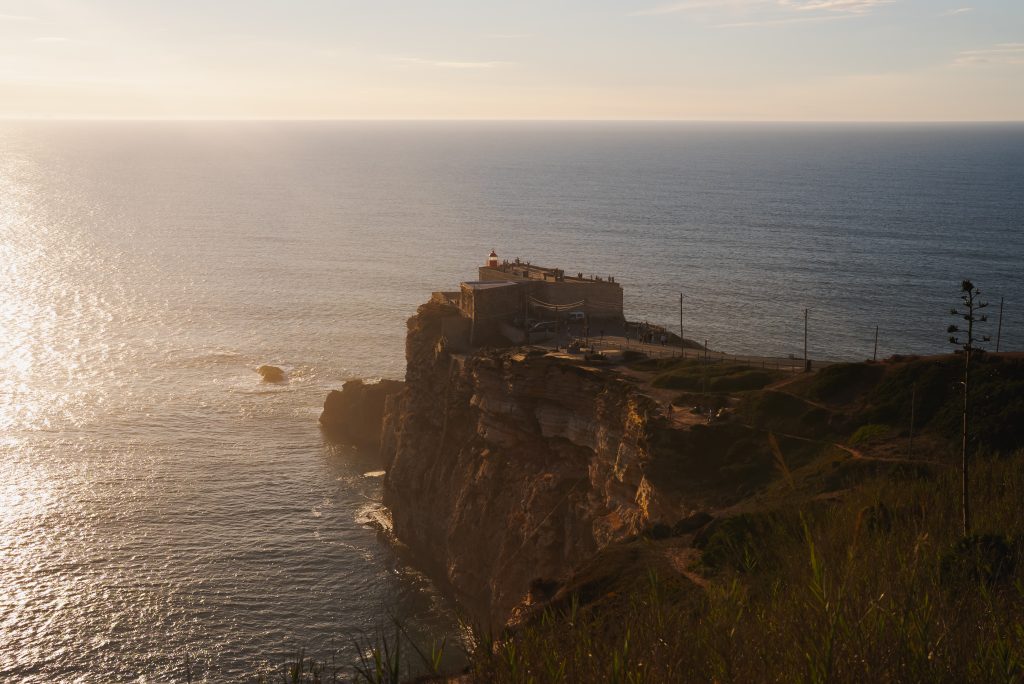
How many perfect days has Nazare’s Fort of São Miguel Arcanjo seen? How many 100ft waves have gone unridden right out front where the wave is called Big Moma.
That idea of togetherness becomes the emotional architecture of the film – two surfers at different stages of life crossing paths and figuring it out as they go along.
It’s a philosophy that runs through everything, not just in what is said, but in how Laura and Imari move through it together. And it begins long before they ever touch the heavy water of Nazaré.
Laura first met Imari at an O’Neill Rookie Rippers event. What stood out wasn’t just ability, but presence – something immediate, familiar. “She’s fiercely competitive, she has huge energy, she’s got an enormous heart and she’s just great fun, she has huge goals,” said Laura.
What followed wasn’t a defined mentor-student dynamic, but something slower. Built through time, shared space and life outside the water.
“She came to Devon and did some training with me pre-season and met my family, she then invited me out to Indo and I stayed for a week with her family,” Laura said. “Time built our trust and our relationship. We talked about absolutely everything under the sun. From pressures young girls feel, to the trials and tribulations of high school, it was everything – it was fashion, to how we like our bikinis, it was just all the normal girly things you could imagine and yeah it was just so fun to just be girls doing the thing we love the most.”
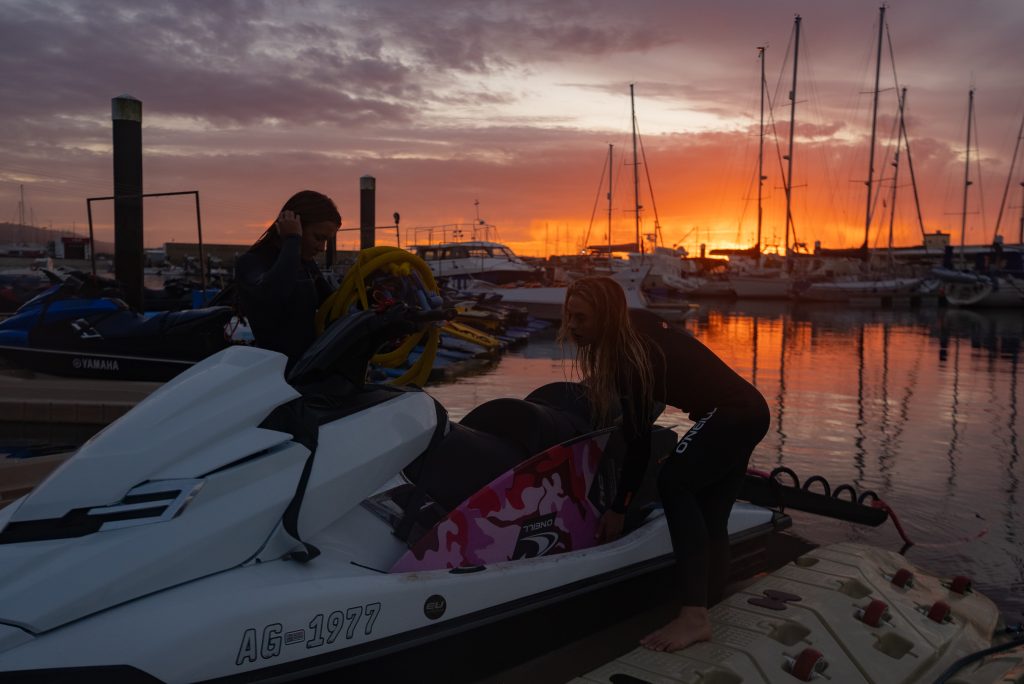
The narrative is buoyed along at a fitting pace — when that mirrors the evolution of the duo’s sisterhood.
That foundation matters. Because when the film shifts into its most unpredictable chapter – Nazaré – nothing behaves as planned.
“The things that didn’t go to plan, as always, was the ocean,” Laura said. “We got really unlucky, or lucky – depends on how you look at it with Nazaré. It was pretty much just seven days of really intense storms, it had been a rubbish season at that point already anyway, so no shock really. I think not knowing whether we would have some easier conditions to ease Imari in, was something I was a bit worried about, having to teach her the job in tricky conditions. It literally went from being totally flat to a big storm, to just trying to search for a window where we could get her in the water safely.”
But Undercurrents is never really about control. If anything, it’s about what happens when control slips and how people respond to that together.
“What we’re doing at Nazaré is serious, but there’s also so much fun to be had, for me it was to never put pressure on her but to feed her with the self confidence that she could do it if that was her choice,” said Laura.
That balance, between intensity and ease, becomes one of the defining tones of the film. Beneath the scale of what they’re attempting, something quieter is always running underneath – a kind of emotional grounding that shapes everything around it.
“There’s still so much pressure on the younger girls to look a certain way, fit a certain mould, and actually it was really tough to have some of the conversations I had with Imari and I think it was really important for both of us,” said Laura. “It’s sad to see they still feel so much pressure, to have a body type that is actually just so far away from the body type that it takes to surf to the best of your capabilities. At the end of the day to surf a wave like Nazaré, you need strength, you need to trust your body, you need to be proud of it and I really hope that in our time together, she learned to be proud of her body.”
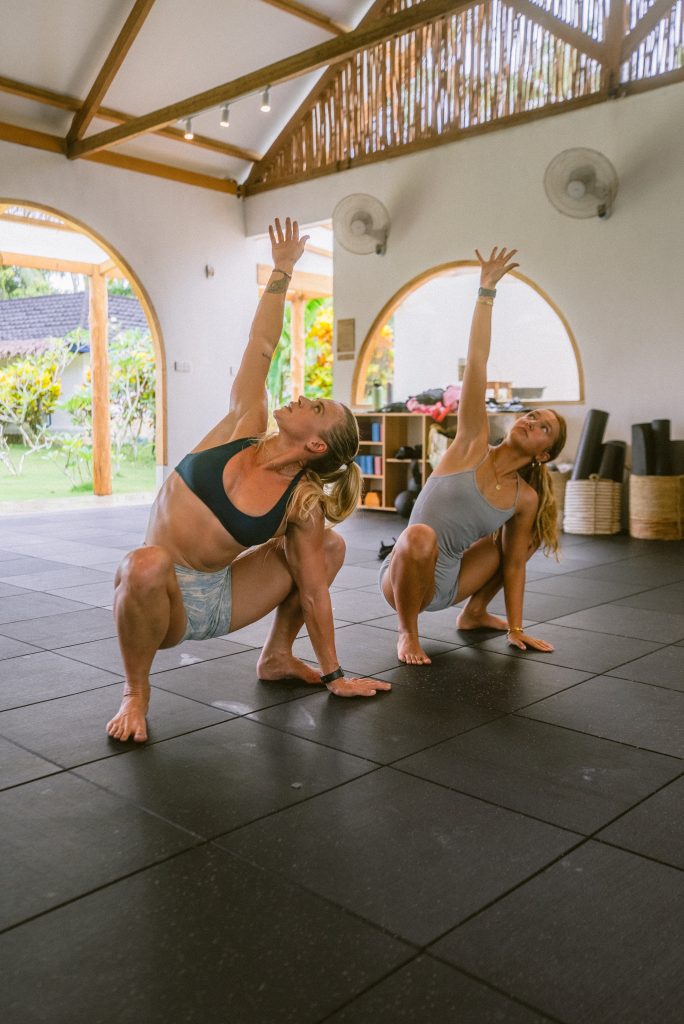
What you don’t see, the daily grind just to surf these places.
And most importantly, Undercurrents resists flattening femininity into something that has to be edited out to be taken seriously.
“There’s so much beauty in women feeling like that they can be all sides of them, just because you’re surfing big waves doesn’t mean you can’t be feminine and love doing a full face of makeup and also really care for fashion,” said Laura.
That refusal to strip identity away from performance runs throughout the film. For Laura, that extends into how she understands performance itself.
“I have never had the wave of my life on a day where I have been doubting myself, to have your mind fully in support is just as important as the waves turning up on time,” she said. And some of the most important parts of the journey didn’t happen in the water at all.
“The moments of doubt I saw in Imari, to be able to be that person for her, to really just support her and make her believe in herself rather than try to push her away from the dream she had to surf, was really special for myself and Maddie.
“I think the thing that surprised me the most would have to be her determination, that girl did not give up, if given the opportunity, these girls are gonna do crazy crazy things, we’ve got a good tribe that’s for sure,” said Laura.
Undercurrents isn’t just about chasing some of the heaviest waves in the world. It’s about what it means to do it with someone else beside you – to build trust, hold doubt, share pressure, and still find joy inside all of it.
In a surf landscape, long shaped by individual myth, Undercurrents shifts the tone. And in doing so, it leaves something the surf industry hasn’t quite had in this form before – a film where softness, strength, femininity and performance don’t compete for space, but sit in the same line of sight.
***
Undercurrents has two screenings left! Thursday April 16th at London’s The Cinema Museum and at Braunton’s 51 Degrees North on Friday April 17th. Tickets available here.