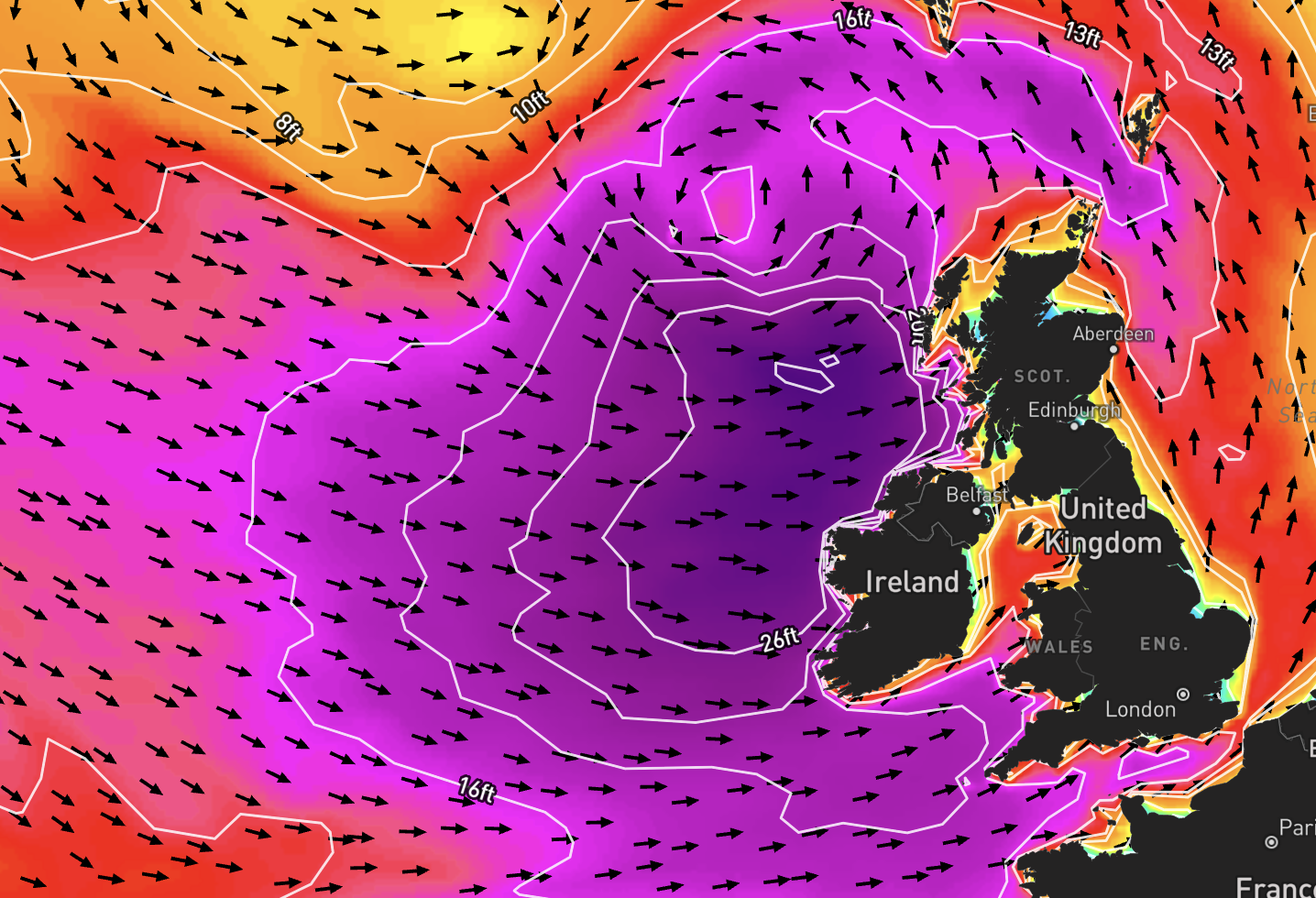
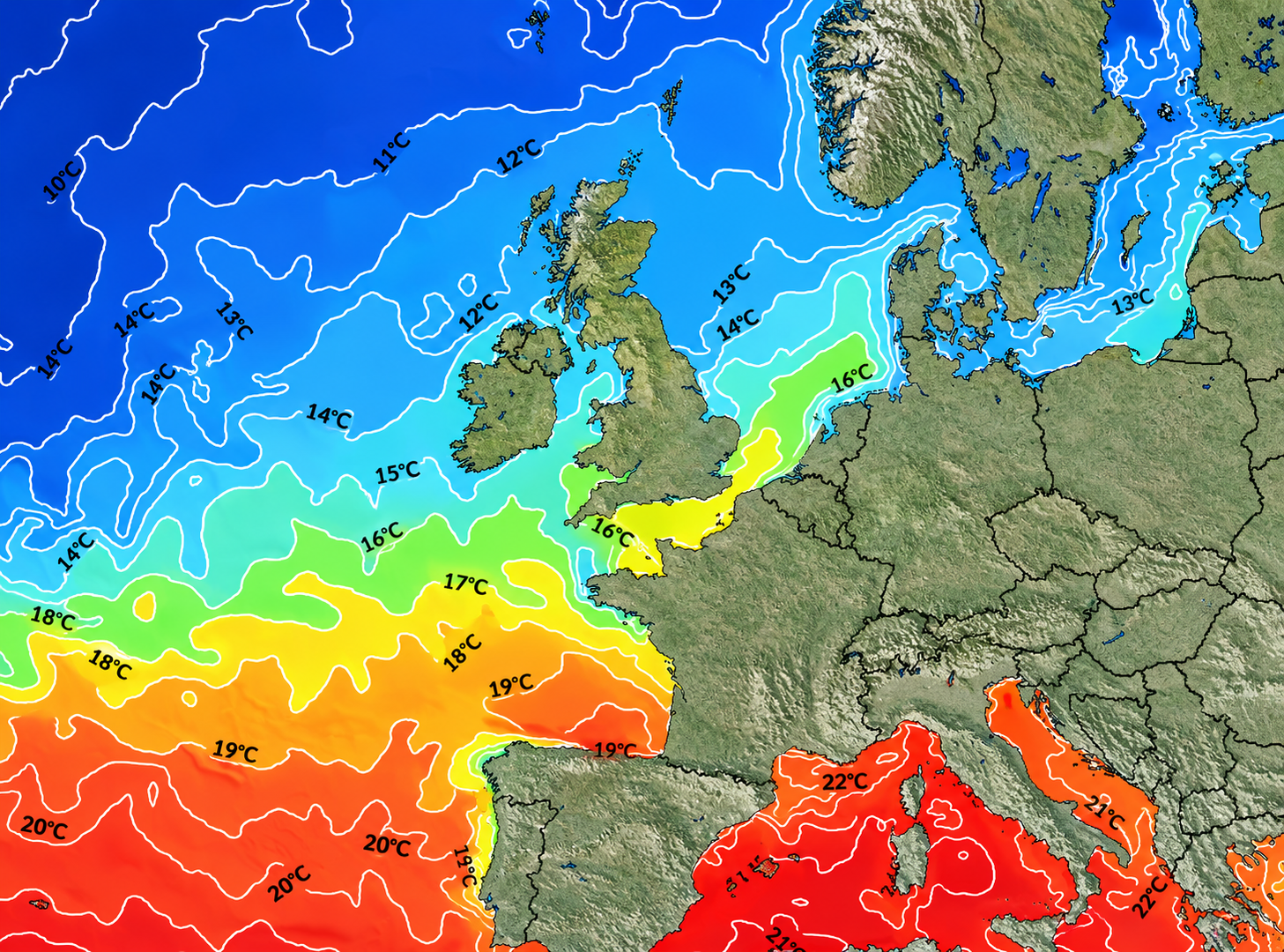
Has it felt a bit warmer in the water recently? There’s more going on here than your 3/2 wetsuit feeling the strain of a UK heatwave. Earlier this week, it was revealed that the UK seas have had their warmest start to the year since records began — which could be responsible for huge changes in marine life.
The surface temperature of UK waters has risen by 0.2 degrees C, taken from the start of the year up until the end of July according to a BBC study. That is higher than any year since 1980.

Image from the BBC showing the spike in water temperature.
Sounds underwhelming? Maybe. But the temperature is thought to have risen due to the usage of fossil fuels. As a result of the temperature rise, new species of marine life are entering our oceans and other native species struggling to cope under the heat.
One species that’s becoming more popular are bluefin tuna, with anglers reporting increased sightings around the south west in particular.
On the flip side, this heating up of the seas is pushing cod and wolf-fish to their limit, according to the study.
The BBC said: “Some exceptional sea temperatures have also been detected by measurement buoys off the UK coast, known as WaveNet and run by the Centre for Environment, Fisheries and Aquaculture Science (Cefas). And the record 2025 warmth comes after very high sea temperatures in 2023 and 2024 too. The Met Office says its data from the end of June 2024 to now is provisional and will be finalised in the coming months, but this usually results in only very minor changes.”
“The main contributor to the marine heatwaves around the UK is the buildup of heat in the ocean,” said Dr Caroline Rowland, head of oceans, cryosphere and climate change at the Met Office. “We predict that these events are going to become more frequent and more intense in the future due to climate change.”
View this post on Instagram
Sea salps have been prevalent in Cornwall’s waters recently, due to a number of factors, including rise in water temperature.
And with less of a cooling breeze, warmer waters can intensify land heatwaves, with potential to bring heavier rainfall.
Hotter seas are also less able to absorb carbon dioxide from the atmosphere, which could mean that our planet heats up more quickly. If it continues to go in the current trajectory, it could mean a larger shift in marine life — it is too soon to know how this will impact fragile ecosystems in the long-run. But we’ll keep you updated.
***
Wavelength is a reader-supported gig. Subscribe to the mag by going here.